A spirit of service in DR Congo
Jacob Yoder reflects on leading an MCC team amid conflict and crisis.

Jacob Yoder of Wellman, Iowa, and West Union Church of nearby Parnell, Iowa, serves as representative for MCC in the Democratic Republic of the Congo (DR Congo). He is based in Goma, North Kivu province, in the eastern reaches of the country.
“I’m sort of a child of MCC,” says Yoder. Growing up, he lived in Lesotho and Ethiopia, where his parents worked as MCC representatives. By the time he followed in his parents’ footsteps in country-level leadership, he’d already served with MCC in a few ways: in Rwanda through Serving and Learning Together (SALT), in Burundi as a monitoring and evaluation analyst, and in DR Congo as a program manager.
Recently, in conversation with MCC staff, Yoder reflected on past experiences with MCC and his current role in DR Congo.

Q: First, can you share a little about your current assignment?
A: I provide leadership to 10 staff and 10 local partners. Through over 20 projects, we work together to serve communities displaced by war, violence and disaster. My role involves discerning how to get to where we want to go as a program, then positioning our staff and partners to put plans into action.
My job also involves going to meet with our partners, visiting their projects, and achieving a better understanding of the impact of our shared work and the challenges faced.
Traveling in DR Congo is one of the greatest joys. It is rarely easy or straightforward, but it’s always an adventure. Because DR Congo is a large country with limited infrastructure, sometimes it takes several days to reach a destination.
Q: Can you tell us about one trip you’ve taken in the past year?
A: Well, this past July, when I visited a project of Communauté Mennonite au Congo (Mennonite Church of Congo) in the village of Ndjoko Punda, Kasai province, it took almost six days.
DR Congo’s Anabaptist churches are primarily in the south of the country, far from the east and Goma, where my team and I are based.
And getting to some of the communities these churches serve requires a serious commitment and days of travel.

Q: Can you tell us about the work in Ndjoko Punda, and the role MCC plays?
A: During pre-election violence in 2017 and 2018, hundreds of families fled into the forest, where they stayed for months in hiding.
When it was safe to return, many came back sick and malnourished. The Mennonite Church of Congo runs a hospital in Ndjoko Punda, but they were overwhelmed with the need. So, they asked MCC for support by financing a trauma-informed primary health care and malnutrition project to help families rebuild.
Q: What does that long journey to Ndjoko Punda look like?
A: From Goma, where my team and I are based, we first take a bus into Rwanda. Early in 2025, Goma was captured by a group called M23, which has set up its own government in the city. In the fighting, the airport was destroyed. Kigali, Rwanda, is now the closest option.
From Kigali, we take a series of flights to Kinshasa, DR Congo. If we’re lucky, we can find a route that takes nine hours, but in July, it took 24 hours, with a long stopover in Addis Ababa, Ethiopia.
From Kinshasa, we take a bus to Kikwit — a ride of 10 to 15 hours, depending on stops and breakdowns, that takes you over expansive plateaus, covered in elephant grass and dotted with thatched houses and palm trees. We sleep at the guesthouse of our church partner Communauté des Églises de Frères Mennonites au Congo (CEFMC; Community of Mennonite Brethren Churches in Congo) and greet church leaders, then continue to Tshikapa, another six to eight hours by bus, and meet with Mennonite Church of Congo.

The following morning, we board a dinghy on the Kasai River. Traveling the river, we watch as the sprawling city of Tshikapa turns to fields, which turn to palm tree plantations, which give way to forests.
The river is known for its diamonds. We see women sifting for them on the banks, men digging and diving. As we ride by, the miners greet us with excitement and curiosity. In quieter stretches, hippos emerge and disappear back into the river. Toward the end of the ride, we have to pass through several rapids, each more violent than the last.
Finally, motorbike drivers take us to Ndjoko Punda. We are greeted by singing from the local church and an invitation to dinner at a church leader’s home.
Q: You’ve mentioned a few ways that conflict has shaped your work and travel. Can you tell us more about leading a team amid conflict and risk?
A: Leading in moments of crisis is about preparation and communication. We had been preparing for the fall of Goma, and the possibility of evacuation, for nearly three years.
We kept an up-to-date contingency plan, in consultation with our partners, other local organizations and United Nations security updates. We also considered geopolitical and historical context.
The plan was communicated with staff, so that, when needed, it could be implemented immediately.
When Goma fell, I was in New York, speaking about our work with UN officials. It was not fun to be apart — I wanted to be with my team.
But I also trusted them to implement our plan. When tanks and troops were encroaching on the city, the team coordinated so well. They made sure that everyone was out before traveling onward.
Q: Tell us more about how you’ve seen members of your team take care of each other in the midst of crisis.
A: What I appreciate so much is the spirit of service I continue to witness among our team.
Before Goma fell, the team and their families had been displaced in 2021, when the nearby volcano Nyiragongo erupted.
Certainly, going through so much together has brought us closer and cultivated mutual trust.
To work in a place where there is this type of love is an incredible honor.
To work in a place where there is this type of love is an incredible honor.”
Jacob Yoder
Q: And as you’re leading the team amid these challenges, how do you take care of yourself?
A: In the midst of crisis, I try to be intentional about identifying my emotions. I try to stay active, playing soccer when I get the chance. And I make sure to connect with colleagues and friends. Then, when things have settled, I find traveling life-giving and reenergizing.
I also begin my days with prayer.
Q: On the topic of prayer, we came across this reflection from your SALT yearbook.
Faith Journey: It's inspiring to live in a culture that values prayer so much. Prayer is an indispensable aspect of Rwandan life. It's more than just a way of connecting with the supernatural. It's a legitimate solution to problems. Because of my time in Rwanda, I am learning to appreciate the practical value of prayer. It helps me reorient myself and reevaluate what is truly important. I am a better person when I pray, and I can thank Rwanda for that.
Would you say your time in Rwanda still informs your prayer life?
A: It is really interesting to read those reflections! Sometimes you develop habits and you forget where they came from. Living in Rwanda certainly shaped the way I engage with prayer. It has become a form of meditation — an opportunity to give thanks for the people around me and center myself around the attributes I seek to exercise in my daily life. I often begin my mornings praying for my team, our partners, for the strangers I came into contact with the day before, and reflecting on the fruits of the spirits. This is not something I used to do, but today it helps me start my days in the right spirit.
Q: Can you tell us a little more about your experiences with SALT in Rwanda?
A: I had recently finished college and knew I wanted to explore international development. I took a paid internship in Washington, D.C., with an NGO working in agricultural development. But I came to feel like I needed to be closer to communities and the individuals actually doing the work of development.
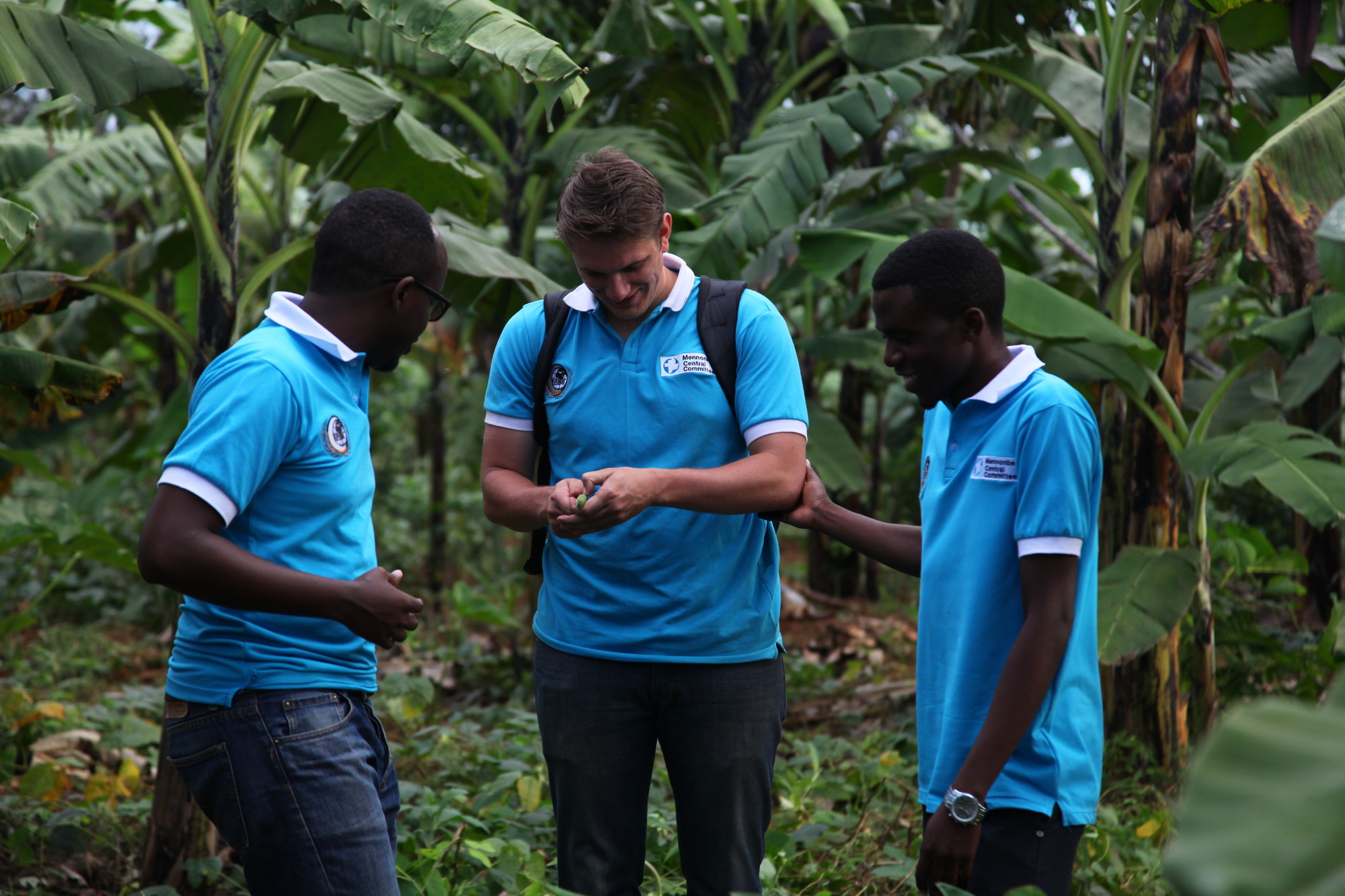
I learned so much in Rwanda, working with PDN (Peace and Development Network, an MCC partner that works in conservation agriculture). I joined in on monitoring visits and trainings, report writing and data analysis. It was an incredible opportunity to learn from people connected to communities in a way I was unable to from a desk in Washington. These experiences gave me an incredible foundation.
Q: After your year with SALT, what did you do?
A: After I finished my SALT term, I was excited at the prospect of building on my monitoring and evaluation skills in a new country. There had been an attempted coup in Burundi during my SALT year, and I felt drawn to test myself in a new environment where the work was especially consequential.
While continuing to support PDN, I also worked with Help Channel Burundi, where I supported Canadian Foodgrains Bank and humanitarian assistance projects.
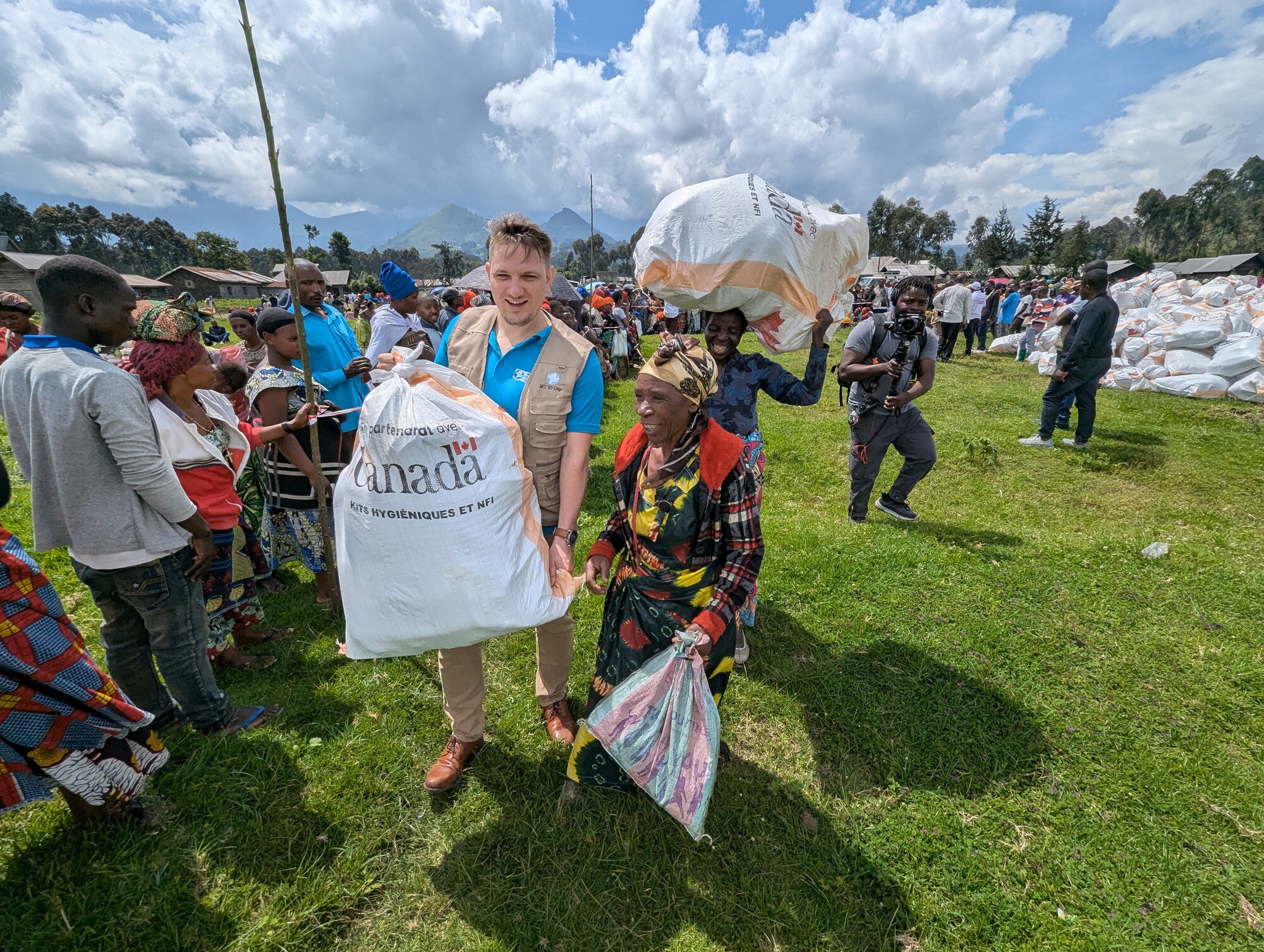
I owe so much of what I know about food security to Help Channel. My mentors taught me about everything from organizing food distributions to managing relationships with government officials. I carry these experiences with me today, as my team works to provide humanitarian assistance to displaced people in eastern DR Congo, with support and funding from the Government of Canada.
My mentors taught me about everything from organizing food distributions to managing relationships with government officials.”
Jacob Yoder
After work, I would drive down to Lake Tanganyika and watch the hippos playing as the sun set over the mountains in DR Congo. I was eager to see what life was like on the other side of the lake.
When I did, I found Goma to be a beautiful city. It was just a three- or four-day trip, but it made a deep impression. I met some of the MCC team and partner staff. The importance of their work was inspiring.
Q: How did the opportunity to work with that team in DR Congo come about?
A: After Burundi, I took a few months to travel, then worked on the family farm in Iowa. Planting cover crops and sorting hogs was not enough to really keep me busy, so I started a goat operation with my dad. I learned a lot of lessons about innovation and building systems that I carry with me even today.
Still, I found myself itching to return to MCC. I was really excited when I saw the DR Congo program manager role posted. It was exactly the role I was looking for. As program manager, I worked with all of our projects, reviewing reports, visiting partners and supporting capacity-building.
Q: What was it like eventually stepping into the rep role?
A: When I became representative, I felt like I had big shoes to fill. But I was fortunate to have such a great mentor to observe and learn from: the previous rep, Mulanda Jimmy Juma. Mulanda is quick to encourage, wise in the midst of conflict and so intentional about creating opportunities to lead within his teams.
Q: Overall, how have your colleagues, and the communities you’ve worked with, shaped your faith?
A: Living and serving in DR Congo has shaped my faith in many ways.
The spirit of service of my team, their sense of mission and selflessness in times of crisis, have made me proud and so grateful. Our partners have an incredible commitment to the communities they serve, in contexts that are not without risk. It inspires me to do more, and to be more, for our partners and our team.
In communities, we witness people who sacrifice so much to host families — often complete strangers — who have been displaced by war. Their generous hearts have shaped the way I view radical love, hospitality and resilience.
These are qualities we are taught in Sunday school, but to see them practiced before your eyes in the toughest of conditions — in the midst of war and violence — can only shape your aspirations as a person of faith.
Top photo: Jacob Yoder, representative for the Democratic Republic of the Congo, stands in a field during a visit to partner organization Oasis de la Culture in fall 2021. (Photo courtesy of Jacob Yoder)
Stories from the Democratic Republic of the Congo
How do you help a soldier reintegrate peacefully into their community? How do we help facilitate democratic elections?
Hear illuminating stories from MCC partners on the ground in the DR Congo.

A spirit of service in DR Congo


MCC Canada awarded $4.7 million grant for humanitarian assistance in the Democratic Republic of the Congo
- Food


Collaborative Anabaptist response to DR Congo crisis
- Disaster response

Relief, Development and Podcast | Behind-the-scenes with emergency relief / Bruce Guenther


Water impact report - Summer 2024
- Water

General impact report - Summer 2024

Find your place
MCC is always looking for people to join our work of serving others in the name of Christ.
Where we work: DR Congo
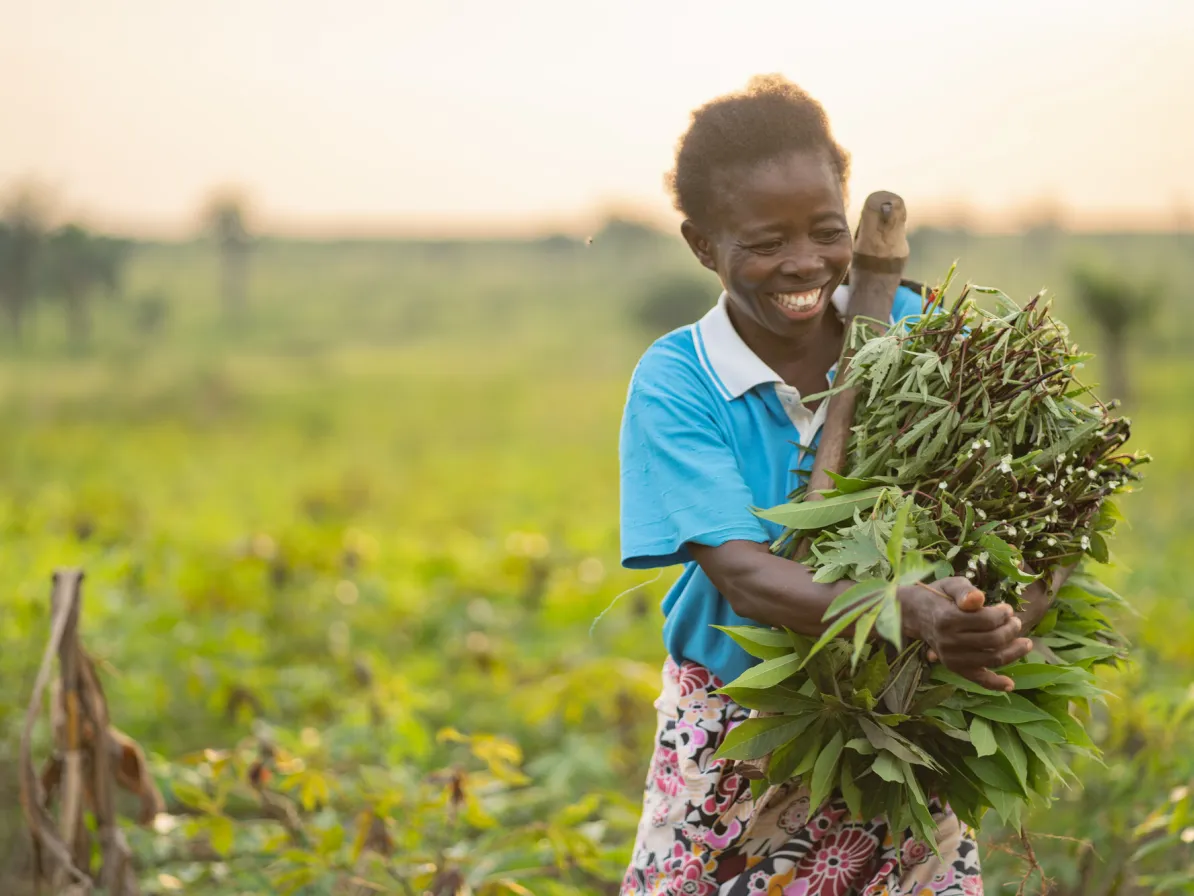
Years of conflict in eastern DR Congo has left millions of people displaced and in need of urgent support.
In addition to emergency assistance including food, cash and other supplies, MCC partners are working to support sustainable farming efforts, trauma healing, health care and education.

Young adult opportunities
Looking for an opportunity to travel, learn and serve? Or eager to serve in your own community?
MCC offers a wide range of volunteer programs for young adults.
Give a gift where needed most
Every donation makes a difference.