


As a growing number of Ontarians face increasing food and housing insecurity, it can be tempting to ask, “What can we do for them?” But there is another way to enter this challenge, and part of the answer lies even in the name of MCC Ontario’s poverty reduction program: Walking with People in Poverty.
What does it look like to truly “walk with” people, rather than “do for” them out of charity? For Tim Shields, MCC Ontario’s new Community Mobilizer, that question has shaped his life for years.
Not a “good” neighbourhood
Thirteen years ago, when Tim and his wife Bethany were newly married, they shared a quiet but persistent conviction: they wanted their lives to be shaped by real connection with people who are often overlooked and marginalized. They had already spent time volunteering in programs like Out of the Cold where they helped to serve meals to unhoused people but they sensed something was missing. “We wanted to do more,” Tim recalls.
That conviction eventually led them to a decision that surprised people in their lives. They decided to buy a home in St. Catharines’ Queenston neighbourhood. When they told a friend who worked as a realtor, his response was blunt: “No, you don’t want to buy a house there.” The neighbourhood had a reputation for being “rough”. But Tim and his wife were determined.
The way they found their Queenston home felt fitting. Not through listings or bidding wars, but through relationships. “My wife’s coworker’s barber’s family,” recalls Tim with a laugh. “They wanted to sell to a young family and we fit the bill.” It was right in the neighbourhood they hoped to be part of. And from the beginning, they chose to open their door wide.
Open doors, open hearts
One of their first steps was simple: they hosted a barbecue and invited the whole neighbourhood. Over sixty people passed through their house and backyard, including Tim's former soccer teammate who unexpectedly showed up. That teammate introduced Tim and Bethany to The Queenston Neighbours, the local neighbourhood association rooted in the neighbourhood’s strengths and assets. “Often, neighbourhood groups pop up out of a problem or crisis,” Tim says. “Whereas this one was focused on ‘these are the positive things in this neighbourhood – let’s make a group based on that.’”
This focus on strengths is significant because from the outside, Queenston’s assets are hard to see – homelessness encampments and neglected buildings leave a strong first impression. But Tim and his wife quickly learned that reputation doesn’t tell the whole story. “When you actually get to know these people and learn their story, you realize, actually, these are great people – and some of them maybe have fallen on hard times.”
For Tim, connection has always meant more than meeting immediate needs. “It was more than just ‘here’s some food, here’s some warm clothing,’” he says. “It was more, ‘hey, what’s your name? Tell me your life story.’” He talks about the difference between serving a meal and sitting down to eat together. The second takes more time. It also builds trust.
Building authentic trust
That trust shows up in small, everyday moments. Like the time Tim casually told a neighbour from a nearby group home that he was welcome to sit on their porch anytime. The man took him at his word. “I’m pretty sure he was on our porch at least four or five days a week this summer,” Tim laughs. “It’s all good.”
Whether it’s helping someone navigate landlord responsibilities or housing fears, Tim resists quick fixes. “I could just go fix that leaking sink for you,” he says, “but… I also want to encourage you not to be afraid of asking your landlord.” Here again, drawing on the strengths of the community comes into play. Tim gives credit to the Queenston Housing Committee (a subcommittee of The Queenston Neighbours) that has taken on a structured approach to educating tenants about their rights. As Tim and others in Queenston Neighbours walk alongside their neighbours, they can encourage each other and listen to the very real anxieties they carry.
In early 2025, Tim’s years of relationship-building came together in a new way. MCC Ontario partnered with The Queenston Neighbours to co-create a part-time Community Mobilizer role shaped by local voices and rooted in trust. Tim was a natural person to take on that job – he had been doing that work voluntarily for years already.

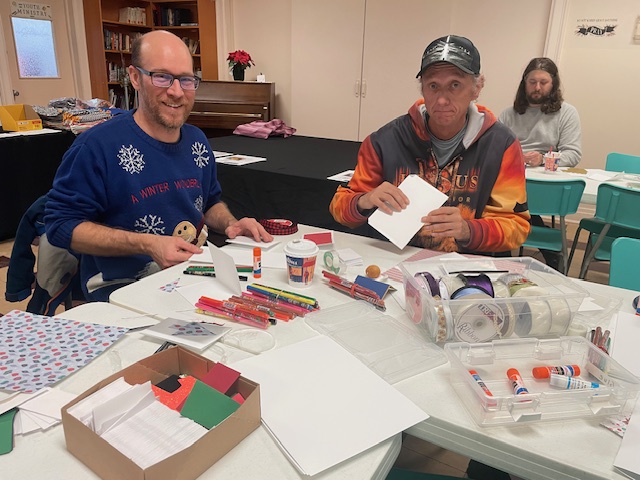
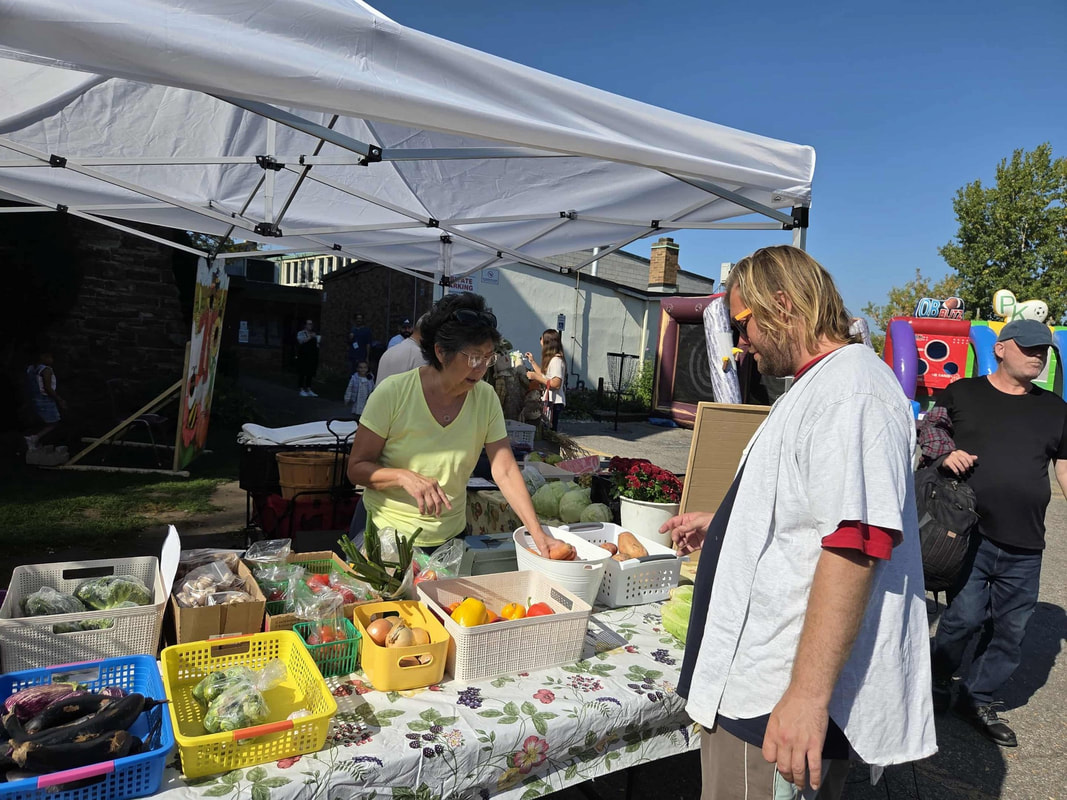
In only the last six months since June when Tim was hired, that relational approach has borne visible fruit. Queenston Harvest Fest, a family-friendly celebration of the neighbourhood where vendors came to connect and community members shared food and hosted activities, welcomed over 500 people—double the participants from the year before. A December holiday event brought Queenston residents together with MCC volunteers to create cards, assemble 151 MCC school kits, and celebrate the community, with even the mayor stopping by to express his gratitude.
“It’s been an amazing start to this partnership [between Queenston Neighbours and MCC], for sure,” says Tim. “I’m looking forward to what’s coming up this year!”
MCC’s growing partnership with The Queenston Neighbours will focus on strengthening belonging, developing a community-powered food security project and addressing food and housing affordability. Look for an upcoming episode of Undercurrents where we take you to Queenston and learn more about what it means to “walk with” the folks there.
Look for the full story in an upcoming episode of Undercurrents!
Food for thought:
- Is it easier to for you to “do for?” or “walk with”? What is challenging about each?
- Who is a person in your life, or where is an area of your life, where you can change from “doing for” to “walking with?”. Who do you need to sit down for a coffee with, or invite for a meal?