Hope and encouragement in Gaza
Q&A with MCC Representatives for Jordan, Palestine and Israel, Sarah and Seth


Since October 10, a fragile ceasefire has been in effect in Gaza. MCC and our partners have worked tirelessly throughout the last two years to provide emergency relief and support to vulnerable people suffering from the Israeli military's bombardment, destruction and blockades. Our partners have shown incredible courage in the face of danger and dire need. Their faith has taught us to never abandon hope.
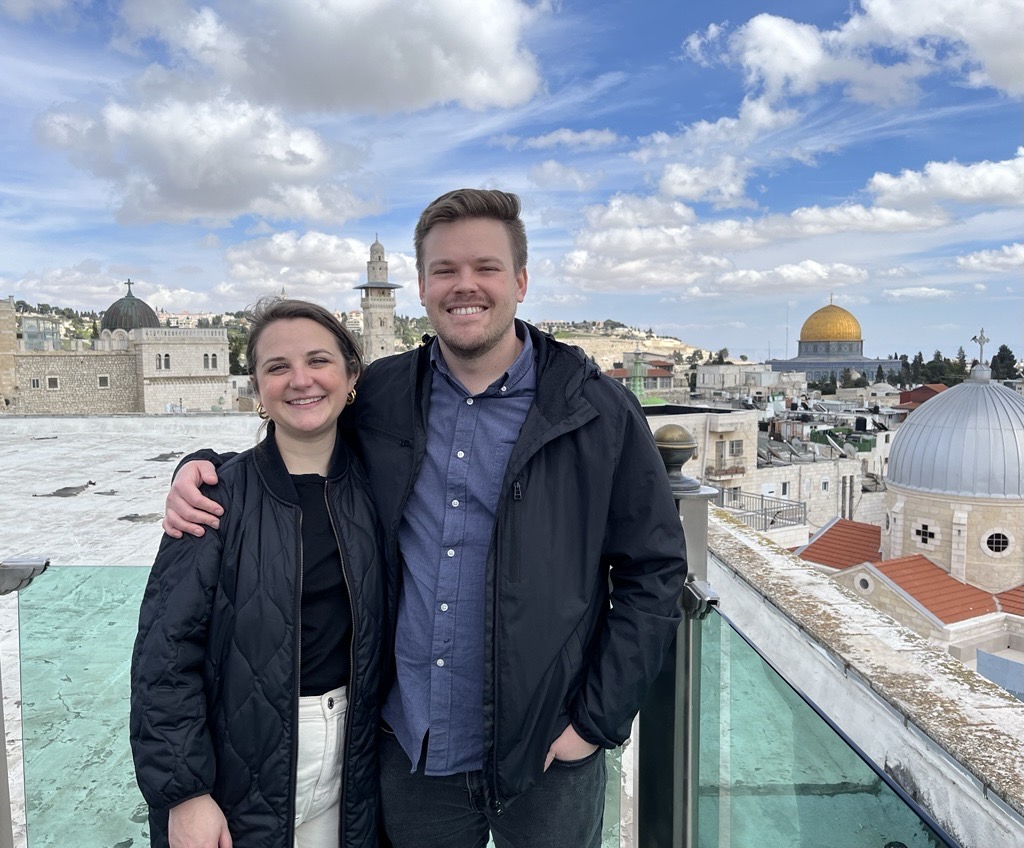
We sat down with our MCC representatives Seth Malone and Sarah Funkhouser to ask how the ceasefire has impacted our partners and MCC's work.
Since the ceasefire, how are MCC and our partners providing assistance to people in Gaza?
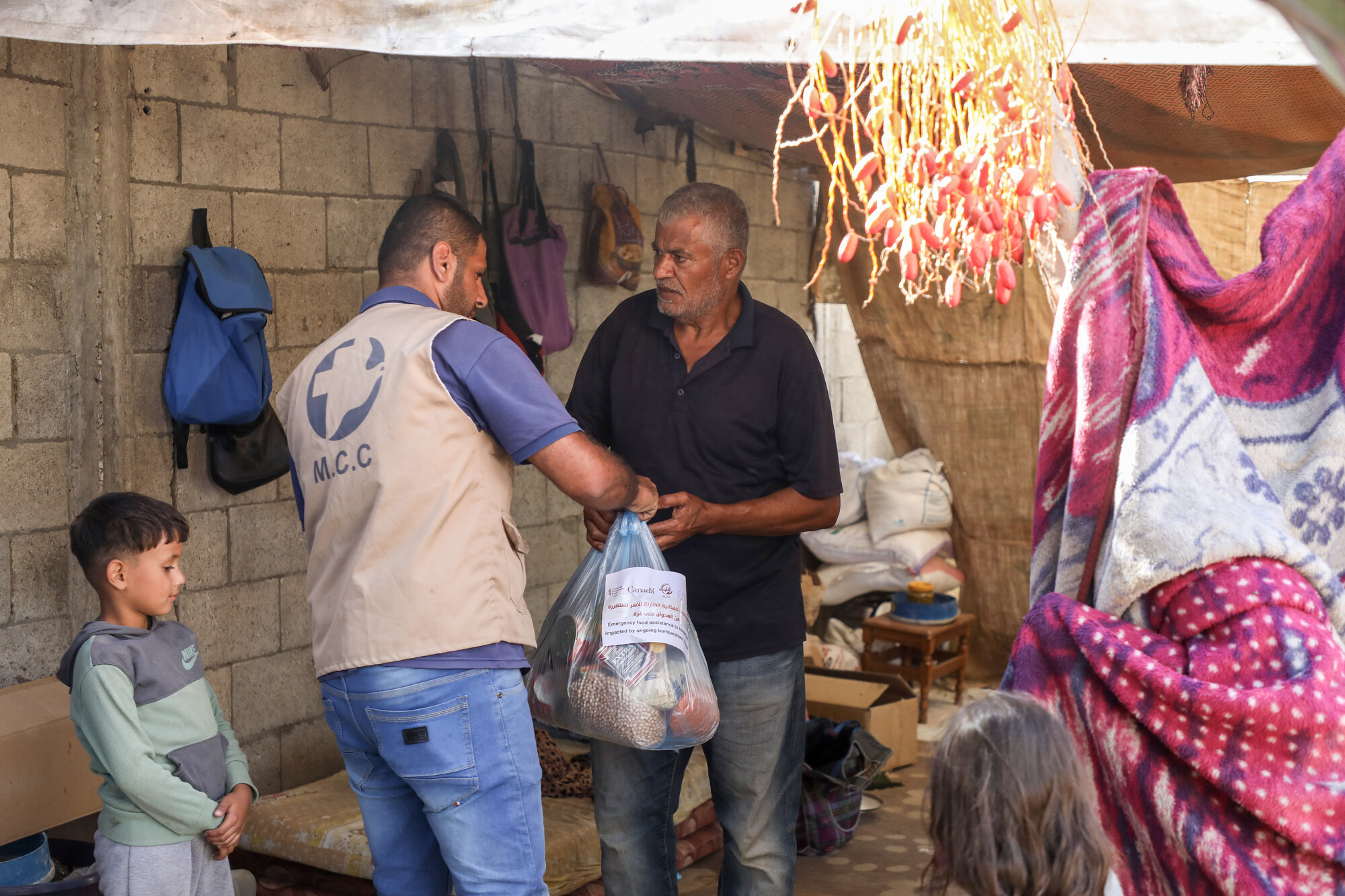
Seth: We’re able to respond to a certain extent. We can send money to our partner Al-Najd Developmental Forum (Al-Najd), who has been able to buy some goods locally. It depends on what is available on the local market. All of MCC’s projects start with Al-Najd because they know what is available.
It is typically one major distribution a month for 500 to 1,000 families. With schools reopening in the fall (2025), Al-Najd has locally procured back-to-school supplies and clothing for children with MCC support. There will also be some psychosocial support to help the kids ease into school. These children live in tent camps and, like all the children in Gaza, have missed two years of schooling. Support is always needed for these distributions, and we are thankful to those who continue to give and pray for our partners, as well as for those who advocate for an end to the violence. There is still a huge need.
MCC and Al-Najd began their partnership in 2008, responding to different emergency response projects in Gaza over the years.
Could you take us behind the scenes of how MCC and Al-Najd work together to respond on the ground?
Seth: Al-Najd will come to us with an idea when they have found a vendor and will make a proposal. We’ll talk about the goods they can put together, and how many families it can support. We don’t have staff in Gaza, but Al-Najd has, in essence, become an extension of our MCC team and we are so closely connected in their work. Between us, we’ve perfected the playbook for getting projects done quickly. From the initial idea to sending the money and procuring the goods, it takes us two or three weeks. There is a lot of good communication, with our staff talking through issues with their staff nearly every day. We have developed a process for getting projects done quickly.
The tireless, courageous work of Al-Najd has been a source of hope and encouragement in Gaza. “We do not back down, especially now, when people need us most,” said Rifqa Al-Hamalawi, the director and founder of Al-Najd in a recent interview. Al-Hamalawi is the recipient of MCC’s 2025 Michael J. Sharp Global Peacemaker Award.
Featured text
“We do not back down, especially now, when people need us most.”
Has the ceasefire changed anything for our partners on the ground?
Seth: The majority of international organizations are still barred from bringing aid into Gaza. Al-Najd’s ability to work is dependent on what is available on the local market. None of what MCC has done in Gaza would have been possible without Al-Najd. They have been such a great partner in responding quickly to the needs in their communities. There’s a reason that Rifqa Al-Hamalawi, who leads Al-Najd, won MCC’s peacemaker prize. She is an incredible woman who is always trying and always looking for something that can be done to help families. When you give to MCC, you are giving to them.
Sarah: I think everyone should be aware of the constraints that MCC and our peer organizations are experiencing. Like all the other international organizations that are working in Gaza, we could respond so much more, much faster and at scale, but we just cannot. So, we can do what we can through Al-Najd, but we’re prevented from doing what we would like to do.
Seth: There is some aid getting in from the World Food Programme and other UN entities, but not at the scale that is needed for nearly two million people who were living in famine conditions due to Israeli restrictions on aid. Right before the ceasefire, famine was declared in the north of Gaza, and the middle and southern areas of Gaza were on the way to becoming famine zones. There needs to be a massive scale-up of medical supplies, food and special nutritional supplements to counteract malnourishment.
There are ongoing restrictions on what humanitarian aid is allowed into Gaza. Could you explain what they are?
Seth: New registration requirements for INGOs came out in March 2025. MCC is one of the longest-running organizations serving in Palestine and Israel and has had a registration with the Israeli authorities since 1967. But since the new requirements came out, Israel has been banning all goods from international organizations from entering Gaza because it wants them to register in this new system. Most of the requirements are unworkable and the criteria for registration are extremely politicized to the point where most INGOs are unlikely to succeed.
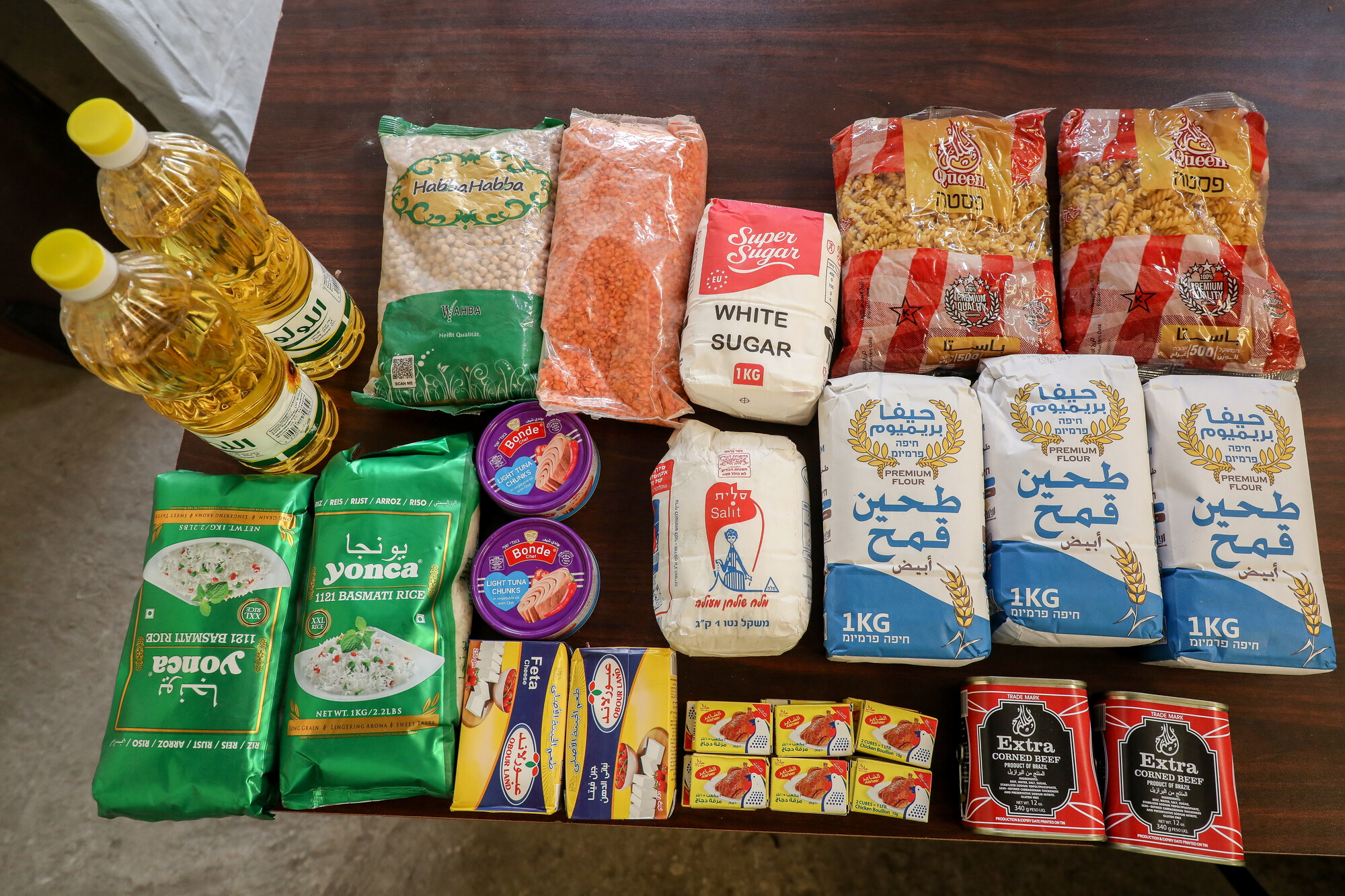
Besides the re-registration issue, the list of restrictions and requirements has not changed since the ceasefire, it has actually grown. There are restrictions on what can be in a food box. For instance, Israeli authorities have put a restriction on sweets – biscuits, juice, honey – anything with sugar in it. Then there are all sorts of approvals and clearances you need to transport aid into Gaza. To put it simply, Israel controls every aspect of the aid delivery process.
You’ve talked about how you are witnessing the loaves and fishes being multiplied in the way Al-Najd responds in their communities. What has this experience been like for you?
Sarah: We feel very lucky to be in community with Palestinians and be welcomed and be the recipient of their hospitality. Seth and I have often discussed how, before living in Palestine, the story of the loaves and fish didn’t really make sense. But if you think about the person of Jesus being from this land, being from this culture, the story somehow makes sense.
Seth: And you know, that is also what Al-Najd has been has doing. It’s like a miracle what they can come up with. There are times when we read the market assessments, and we know there’s nothing left on the local market. But then Al-Najd will come and tell us they have found a vendor and what they can buy from the vendor. That’s when we put the market assessment on the shelf and trust in what they say.
How can people help MCC’s work in Gaza?
Seth: There’s still so much work that needs to happen. And the ceasefire is so fragile. We’re also facing structural problems. There’s so much that needs to be addressed at a higher level. There’s a lot of influence our supporters living in Canada and the U.S. can exert on policymakers. I think people don’t understand how much influence they actually have. There are ways that they can get involved to help support a true, just, durable peace. So please continue to give. Please pray for the safety of our partners. And use what you have to act. And if you are led, get involved with advocacy work for making a change. Because we really need a change here.
Top photo: Rifqa Al-Hamalawi, right, director and founder of Al-Najd Developmental Forum, listens to a woman who received food from Al-Najd in Gaza City in September. Conversation with each beneficiary is a priority for Al-Najd staff in addition to providing food. Other than Rifqa, names are not used for their security. (Photo courtesy of Al-Najd Developmental Forum)
Gaza crisis
Emergency supplies for families in Gaza
MCC and our partners are providing emergency relief in Gaza to people who are in dire need. This gift provides food assistance and much-needed items like comforters, fuel and cash vouchers.