

Only the first names of Ukrainians are used for their security.
Even some horses have become used to the sounds of war in Ukraine.
Under a clear-blue sky on a chilly day last November, two women who work for MCC partner Reimer Center stood in a small, enclosed field near the Carpathian Mountains in western Ukraine. While showing off horses used for youth therapy to visiting MCC staff, there were suddenly loud jet-like sounds echoing off the hills near the stable.
“It is the Ukrainian military doing [weapon] exercises,” said Margarita, who leads the therapy program for Reimer Center.
The horses did not budge. “They are used to it,” she added.
Nearly four years since the Russian military launched a full-scale invasion on Feb. 24, 2022, the citizens of Ukraine are also used to war in Ukraine. Despite the horrible conditions, many have learned to adjust.
These days, Ukraine is a country filled with heartache and hope — heartache with the lives that have been taken and buildings that have been destroyed, and hope that the war will soon end.
Many Ukrainians have a comfort zone when it comes to living in the country. That is the case for Maxym, the director of MCC partner New Hope Center.
Each person has their own limit for what they can live with, says Maxym. “For my family, we will leave in case of [Russian] occupation. If Zaporizhzhia becomes occupied, that is our level. Then we will leave.”
Focus on rest and recovery
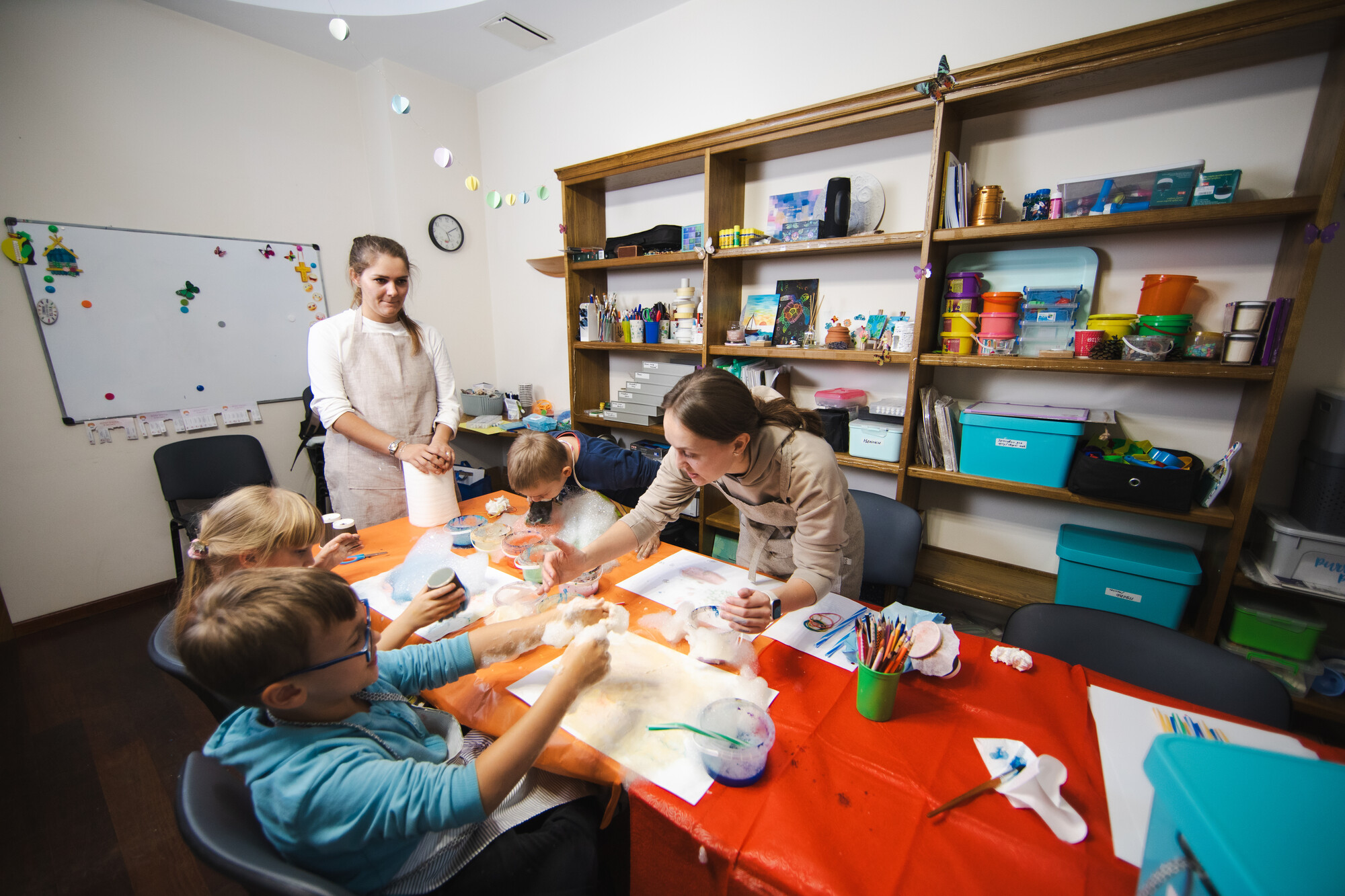
The staff of New Hope were able to spend a time of rest and recovery at a retreat center in western Ukraine near the end of 2024 with support from MCC. Several MCC partners in Ukraine have made mental health for children and adults a focus of their work over the past four years.
In some areas of the country, church attendance has increased over the past few years, say two Ukrainian pastors. Despite the rise, faith-based MCC partners do not make church obligations necessary to receive aid.
Despite many challenges, the 12 MCC partners in Ukraine — several of which are located close to the front lines — continue to serve those in need. One partner finding ways to help despite disruption is Charitable Foundation Uman Help Center, located in Uman, in central Ukraine.
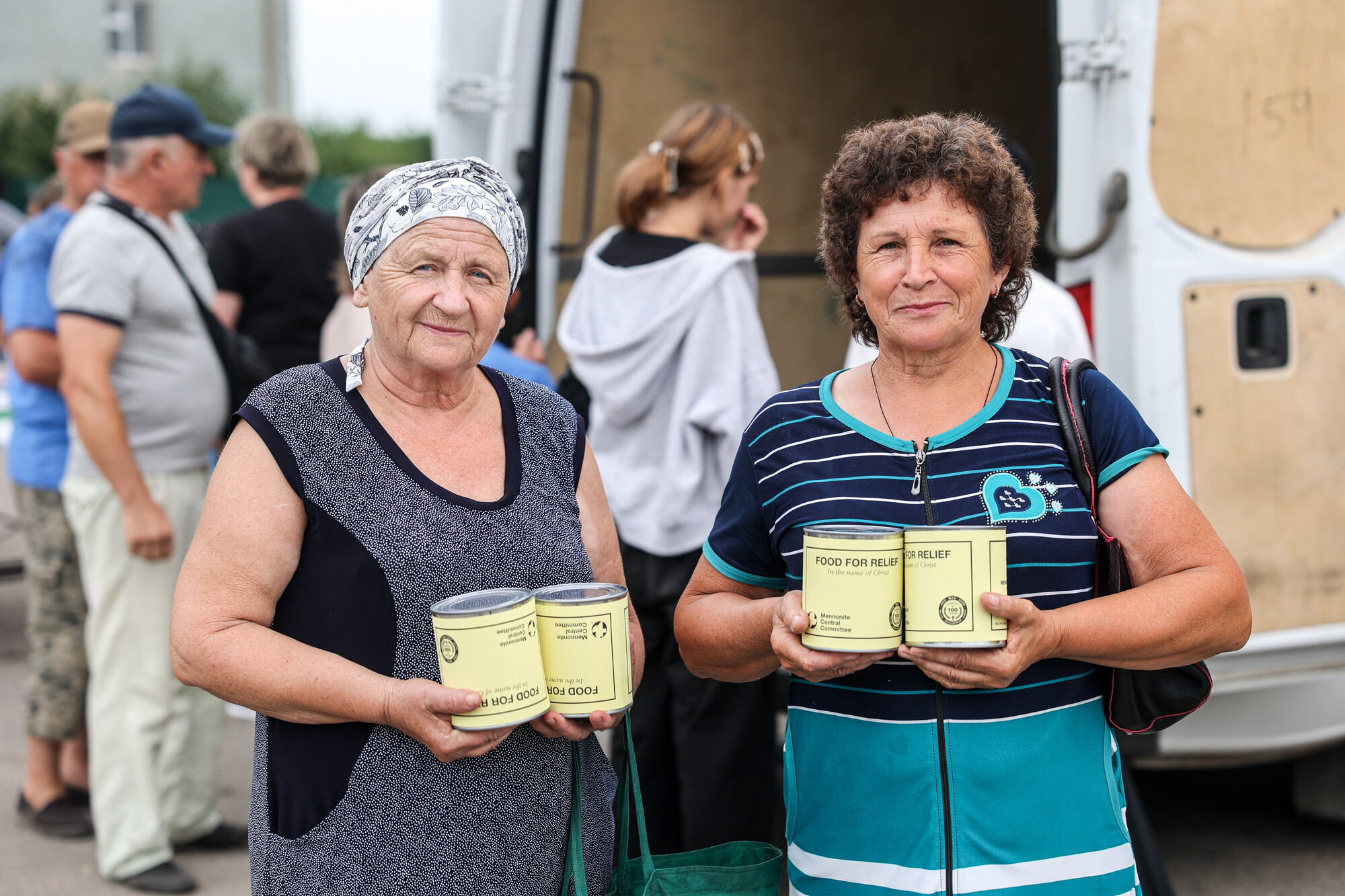
“They buy groceries in bulk to make food packages for internally displaced people and local residents that are designed according to specific plans that MCC has made with them, keeping in mind maximum nutrition and stability of goods,” says Liz Driver, MCC representative for Ukraine.
After the Kakhovka Dam broke in June 2023, most likely due to a Russian military strike, Uman Help Center distributed bottled water to those in need since nearby water supplies were unsafe and unusable.
Challenges for MCC staff
Alona, an MCC staff member living in Dnipro, near the front lines, has faced challenging times herself.
“It was one of the worst experiences I had during the war,” wrote Alona on Jan. 15, 2026, in a note to MCC representatives. “The blast wave was so powerful that we felt the nine-storey building move like a tree in the wind. We were shocked. The children and I went to the shelter because we were afraid that the building might collapse. Now we are okay.”
Her family was without electricity for 29 hours and devoid of a main heating source for 23 hours.
Another MCC staff member, Olha, living in Izmail in southwest Ukraine, had to travel five hours by bus to Odesa and then 18 hours by train to Uzhhorod to attend a few days of optional in-person meetings with other staff. Commercial airfare has not operated in Ukraine since the full-scale invasion in 2022.
Anzhela, an MCC staff member living near Kyiv, saw the temperature inside her home fall to 43 F (6 C) in mid-January due to electrical outages caused by aerial attacks.
These difficulties have not lessened MCC’s commitment to relief for Ukrainians and peace in Ukraine. MCC partners and projects continue working in regions across the country, providing emergency food, trauma support, education and peacebuilding. MCC’s very origins are tied to Ukraine, and the resilience and faith of our staff and partners has continually worked for peace and relief.
Since the start of 2022, MCC has spent more than CAD $32 million (USD $23.7 million) in Ukraine and reached more than 264,000 people with emergency food, shelter or mental health support. In addition to supporting the work of our partners in Ukraine, MCC has shipped 61 containers of relief items, including 124,000 comforters, more than 154,000 kg (340,000 pounds) of canned meat and more than 210,000 various supply kits.
Editor's note: David Driver and his wife, Liz, are MCC representatives for Ukraine. They are based in Warsaw, Poland.
Top photo caption: A young boy is assisted by volunteers during therapeutic horse riding for children who are displaced and affected by war. The project is run by MCC partner Reimer Center, which began under the leadership of the Association of Mennonite Brethren Churches of Ukraine (AMBCU), another MCC partner, and supports physical rehabilitation for children through massage and therapeutic horse riding. The child’s name has not been included for security purposes. (Photo courtesy of Reimer Center)