Kid’s fun day in Gaza supports mental health with art and games
An MCC partner provides mental health support to displaced children in Gaza with creativity and expression at the centre


Moments of joy are rare for kids in a warzone like Gaza. But for a group of young children in a displacement camp, a day of face painting, music, drawing and other activities brought laughter and fun where it’s been sorely missed.
The event, one of 15 held across six displacement shelters for displaced Palestinians across Gaza, is the work of MCC partner Al-Najd Developmental Forum. UNICEF reports that every single child in Gaza urgently needs some form of mental health support, and Al-Najd believes a day of art, expression and fun is part of that support.
They’ve already seen it work for kids like Sara*. Sara is 10, and she’s never known a life in Gaza free of danger. Since October 2023, Palestinians in Gaza have faced repeated forced displacements due to the Israeli military’s relentless bombardment. By late November 2025, the humanitarian catastrophe in Gaza was worsened by winter conditions and flooding, only deepening the need for regular mental health support.
Q1
She is still a child who needs joy, not only safety.
– Sara’s mother*
All that instability creates an environment where trauma is inescapable. In young children, that trauma often shows up as heightened anxiety, reduced play and social withdrawal, which is what Sara’s mother* saw happening to her daughter.
“Sara barely spoke and stayed by my side all day,” says her mother. With no access to school or safe places to play, Sara spent most of her time indoors in overcrowded conditions, where stress and uncertainty were constant. The weight of all the stress she felt had made her withdrawn and anxious.
But the Sara that her mother knew started to reemerge at one of Al-Najd’s events in Deir al-Balah.
When the activities began, and other kids were getting hearts or watermelon slices painted on their cheeks, Sara watched from a distance, clinging to her mother. Seeing Sara’s hesitation, a trained facilitator offered her something to draw with from one of the activity kits. While music played on in the background, mixing with the laughter of fun and games, the act of expressing herself through art began to soften Sara’s demeanor.
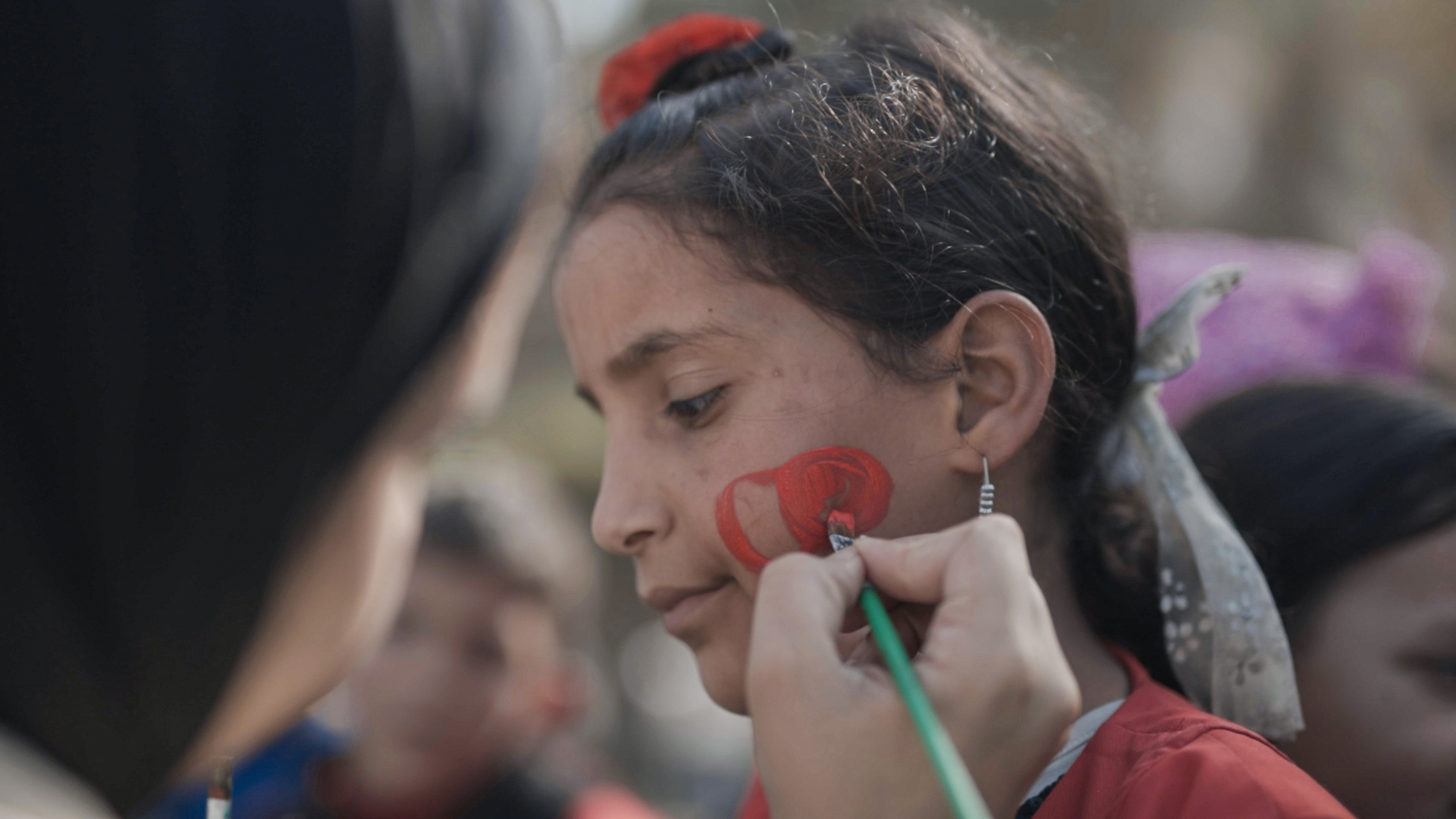
Once she was comfortable drawing, the facilitator gently encouraged her to try a group activity next. Before long, Sara was smiling and playing confidently with the other children like she used to. The facilitators noted how children who had been withdrawn from peer interaction now laughed freely, shared materials and cheered each other on.
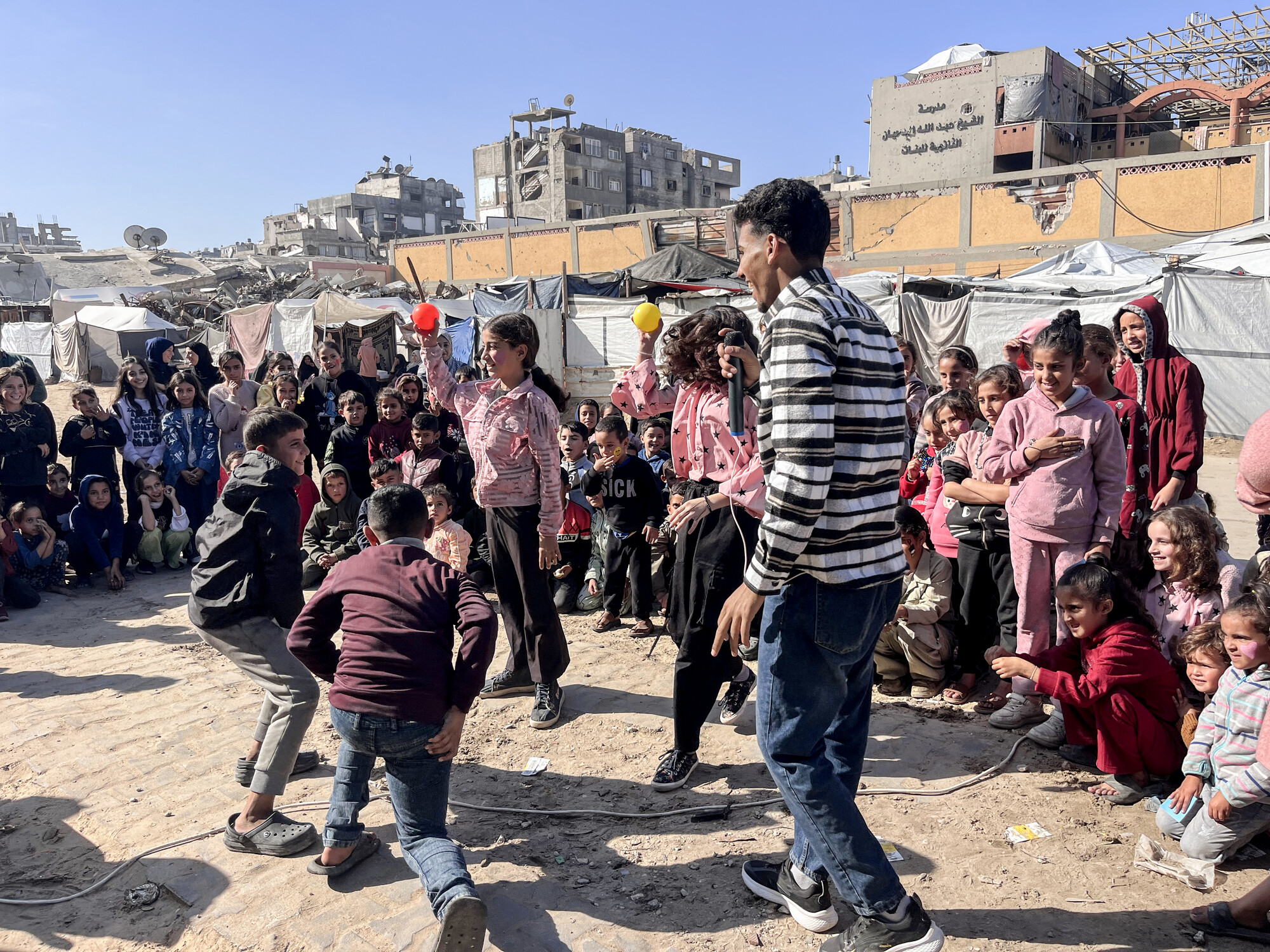
That joyful change in Sara didn’t just dry up and vanish after the event ended. Sara’s mother shared that her daughter seemed calmer, spent more time playing with other children and was more willing to communicate in the days after the event.
“After the event, she started laughing again and playing with the other children. She asks me when she can go back to another activity,” said Sara’s mother. “It reminded me that she is still a child who needs joy, not only safety.”
Sara and the other children were also given a backpack with school supplies like pencils, notebooks and coloured pencils so they could continue to express themselves on their own. The project reached 1,500 children across the six shelters, with trained facilitators and community volunteers supporting safe participation.
“Sustained, child-centred psychosocial support is essential as the crisis continues,” said a representative* from Al-Najd Developmental Forum. “Structured recreational interventions remain a relevant and protective response for displaced children.”
Your continued support of this work means hope and healing for displaced children like Sara in Gaza. Thank you for providing joy, hope and a sense of normalcy to children and their families caught in conflict.
*Names have been shortened or withheld for security reasons