Sharing stories, encouraging hope
A supporter reflects on how reading and sharing stories of MCC’s work has guided her and her church in acts of service.

MCC has always had a presence of sorts in Bernice Zehr’s life.
The Lowville, New York, resident recalls that as a child, she and Sunday school friends would help pack Christmas bundles each holiday season. And throughout the year, she would watch as her mother and other women in the church came together in a sewing circle, lovingly crafting essential items like clothing and soft blankets. “It was amazing. It was like going to art class,” she shares, recalling the fabric, rickrack, elastic and other supplies laid out around the church’s sanctuary.
Zehr knew that the finished items would be sent to places around the world, and that MCC played a role in getting them in the hands of families in need. Yet what exactly happened after the items left the sanctuary, she says, was a bit of a mystery. “I really didn’t have a picture of it.” MCC, she said, “was just sort of letters” representing an abstract organization.
Nowadays, however, Zehr has a clearer picture of how MCC’s work is carried out — and you’ll often find her sharing about the organization’s work with family and friends. Recently, she sat down and looked at photos of fruitful farms in Nepal with her grandnephews, 6 and 9 years old. Other times, she’s shared information about MCC’s relief efforts with friends at church.
“I’ve had more time to explore the whys, the hows. And that made it more fun.”
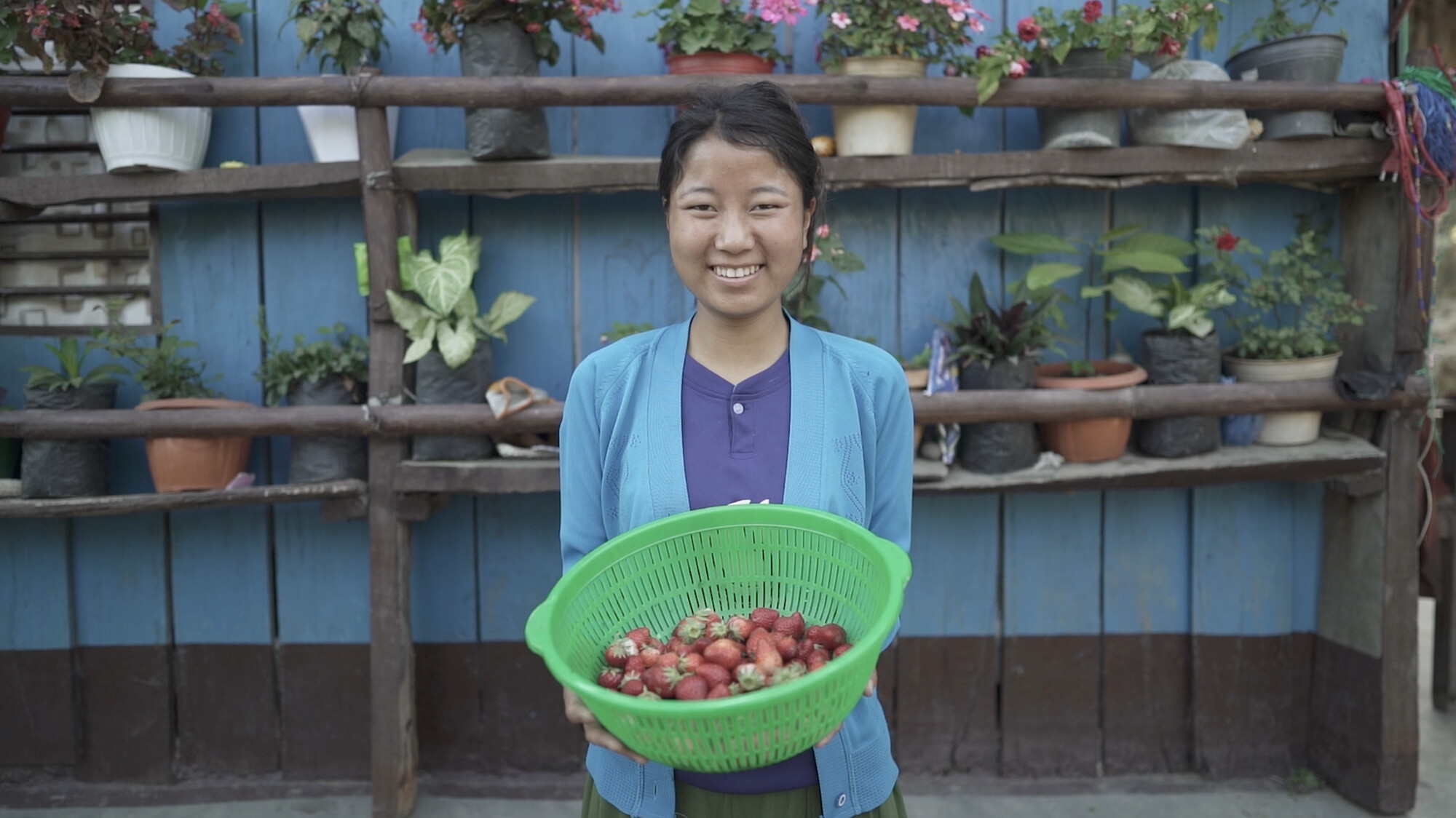
Read more about Puja's strawberry patch in a story from the fall 2025 issue of A Common Place.
She spent years serving her community as a nurse — a career that kept her busy. There was little time for activities like reading. “I used to get nursing journals and didn’t even half look at them,” she recalls.
In retirement, she has welcomed opportunities to sit down with a book or magazine.
Up from the Rubble, a book by Peter and Elfrieda Dyck, recounting the couple’s time serving with MCC during World War II, gave her a clearer picture of the organization’s history.
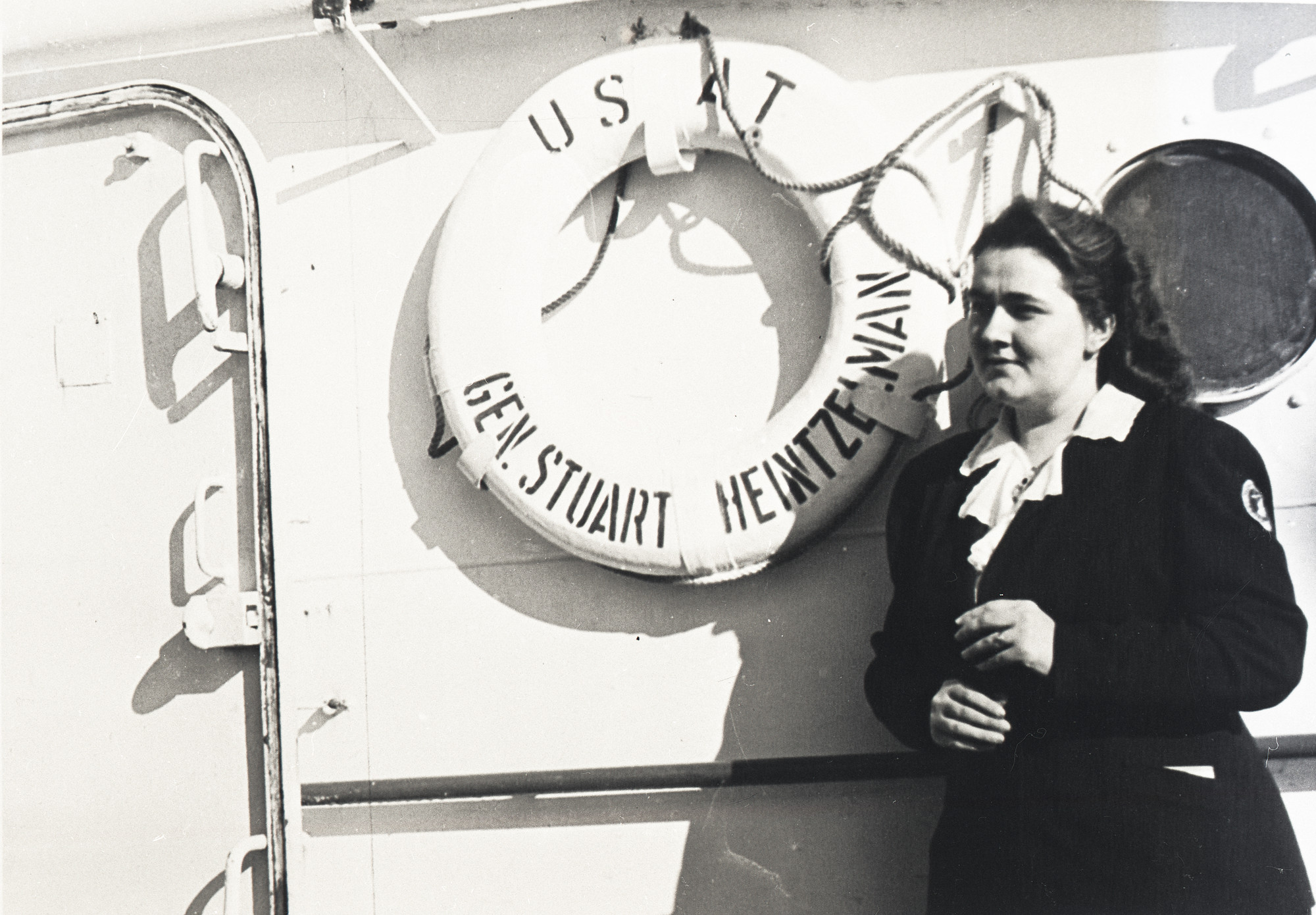
And the issues of A Common Place magazine that she receives three times a year keep her updated on present-day relief, development and peace efforts — and the unique contexts of each country where MCC works.
“It’s like combining history and anthropology and current world news. I mean all at once. You can’t beat that kind of thing.”
One thing that has stood out to her in so many articles is how MCC and its partners have worked to equip people with skills and resources “so that they could go on with dreams and their aspirations” and write their own success stories. “And that I appreciate, because people grow,” she said. “I think that’s actually what Christianity is about, helping people to become those vital energies that we were created to be.”
Her church has a long history of helping people in this way, whether by coming together to rebuild a local family’s barn or through events such as an annual day for MCC meat canning.
And members continue to sew comforters and other items that MCC will distribute. Zehr says that, in a rural community where families find themselves “making their own fun,” these events provide an opportunity to socialize and create while carrying out acts of service. “I benefited a lot from watching, and being a part of, other people in that mission. I think that’s the beauty of church and congregation.”
Still, Zehr says, news of fighting and hunger in places like Ukraine and Gaza can leave people in her community feeling overwhelmed and unsure of how to help.
A visit from James Wheeler, who leads donor engagement efforts for MCC East Coast, provided Zehr’s church with a chance to hear more and ask questions about MCC’s work in these places.
Furthermore, Zehr has taken to sharing stories she reads in A Common Place during small group gatherings at her church. In times of uncertainty, hearing firsthand accounts from MCC staff and partners, and the communities they serve, has provided a way forward. Church members have come away with more detailed information and an assurance that the resources they share are making a tangible difference. And they find guidance in the reflections shared by workers and community members thousands of miles away.
“It’s people in action,” Zehr says. “They’re living with, living among and living out. And I think that is what is so necessary. I think that’s what the gospel is about.”
This is just one way that, through the years, readers have engaged with the magazine. Some take the time to pray for those they see pictured in the pages. We’d love to hear how the magazine has inspired you. If you’d like to let us know, drop an email to Sienna Malik, managing editor of A Common Place, at siennamalik@mcc.org.
Are you interested in inviting a speaker from MCC to your church? Sienna Malik can help with that, too! In your email, please provide your church’s name and location.
If you’re not on the list to receive print copies of the magazine, or digital versions of the stories via email, click here and select your preferred version on the online subscription form.
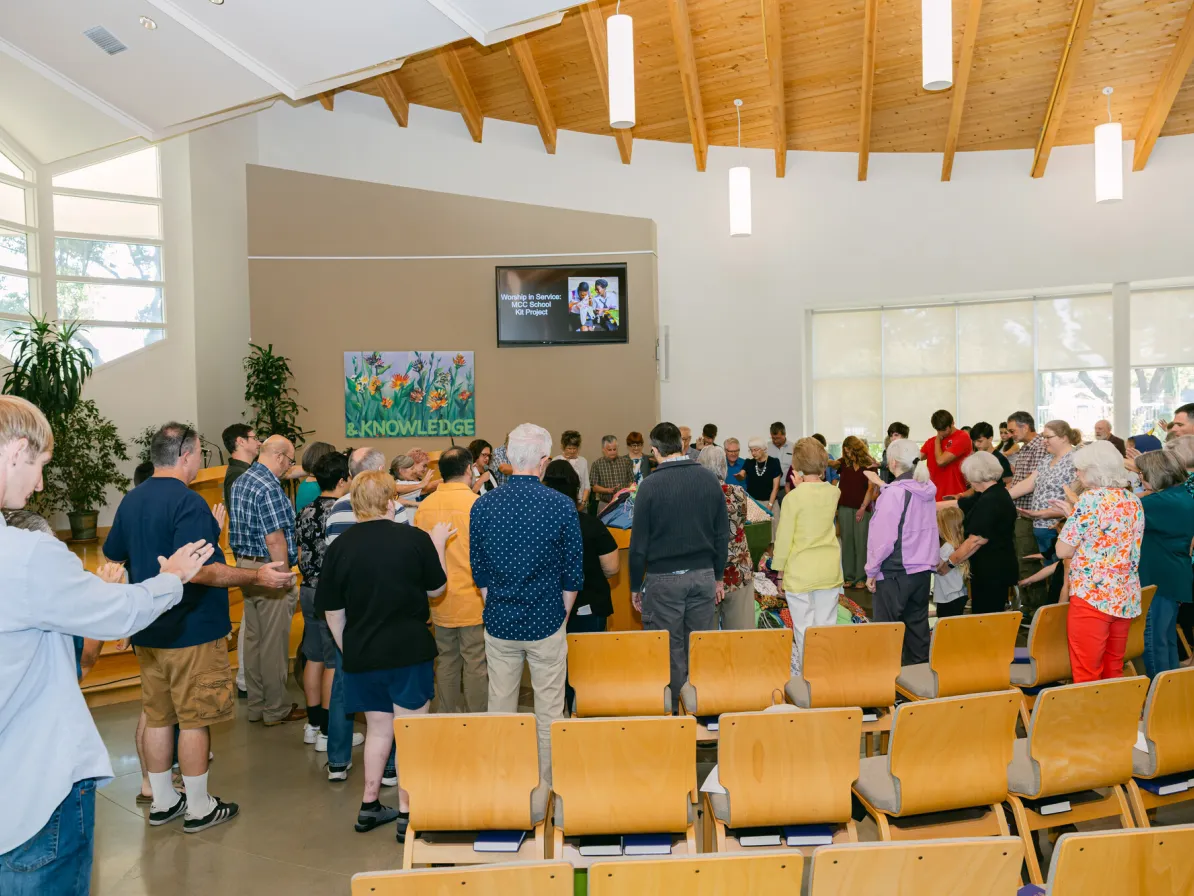
Top photo: MCC supporter Bernice Zehr (at right, bottom row) often shares about MCC's work with friends from her church community, including at gatherings like this one at a home in Lowville, New York. (photo/Hannah Schwartzentruber)
A Common Place
Explore stories from the winter 2026 edition of A Common Place.


Alimento para el cuerpo y el alma
- Alimentos,
- Conflicto, Salud


Primera persona: Maxym
- Conflicto,
- Salud


Bien versado en bienestar
- Agua,
- Salud


La respuesta más adecuada
- Respuesta ante desastres,
- Terremoto

A spirit of service in DR Congo
Resources for churches
Explore resources to help nourish your church or equip your congregation.
Give a gift where needed most
Every donation makes a difference.